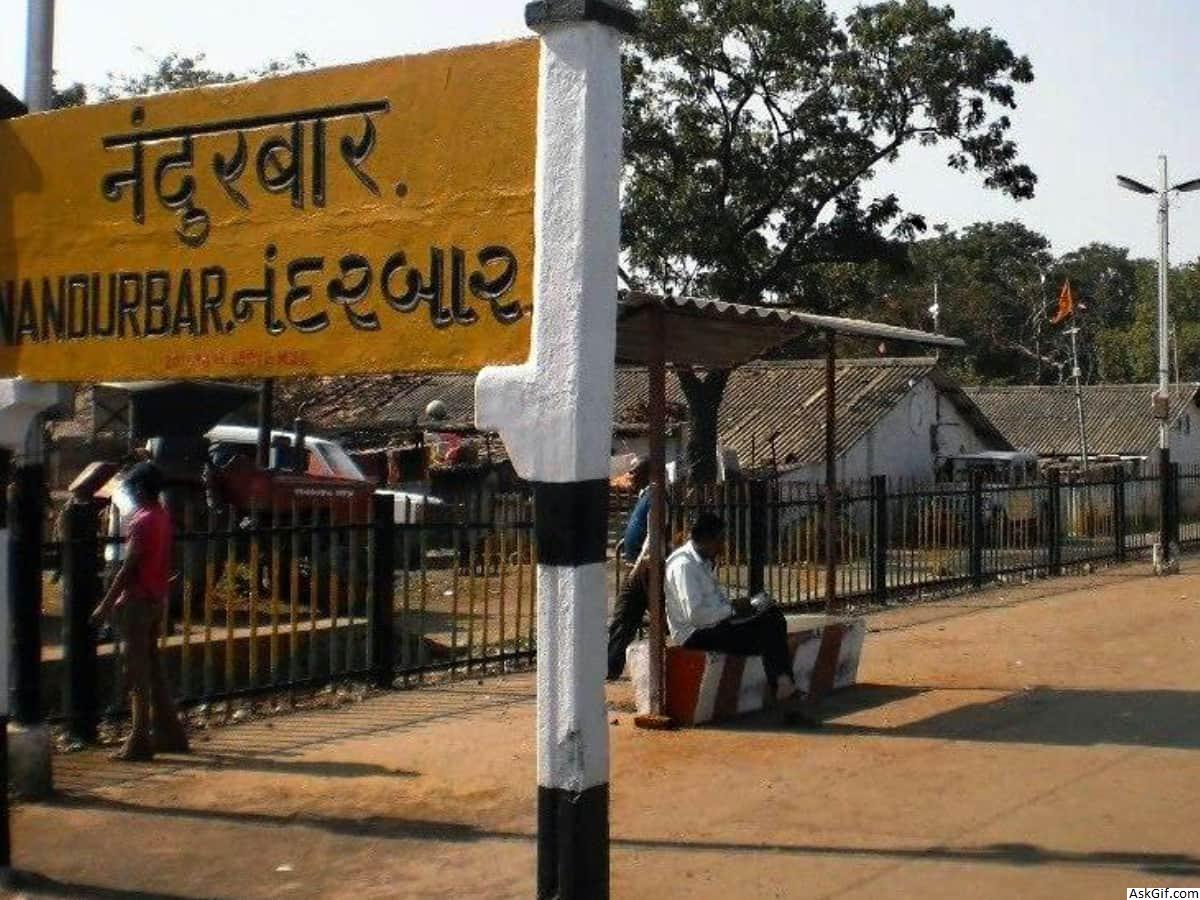
Nandurbar is a city and a municipal council in Nandurbar district in the Indian state of Maharashtra. Nandurbar municipal corporation is the first municipal corporation. Nandurbar is an administrative district in the northwest corner of (Khandesh region) of Maharashtra. On 1 July 1998 Dhule was bifurcated as two separate districts now known as Dhule and Nandurbar. The district headquarters is located at Nandurbar city. The district occupies an area of 5034 km2 and has a population of 1,311,709 of which 15.45% is urban (as of 2001). Nandurbar district is bounded to the south and south-east by Dhule district, to the west and north is the state of Gujarat, to the north and north-east is the state of Madhya Pradesh. The northern boundary of the district is defined by the great Narmada river. It came into limelight during February 2006 bird flu crisis which struck many of its poultry farms. Thousand of chickens from the farms had to be killed and buried in nearby grounds to stop the virus spreading.
Nandurbar is an administrative district in the northwest corner of Maharashtra state in India . On 1 July 1998 Dhule was bifurcated as two separate districts now known as Dhule and Nandurbar. The district headquarters are located at Nandurbar city. The district occupies an area of 5035 km2 and has a population of 1,311,709 of which 15.45% were urban (as of 2001).
Nandurbar district is bounded to the south and south-east by Dhule district, to the west and north is the state of Gujarat, to the north and north-east is the state of Madhya Pradesh. The northern boundary of the district is defined by the great Narmada river.
Ranjana Sonawane of Tembhli village and rushil in Nandurbar district became first citizen of India to get twelve (12) digit Unique Identification on 29 September 2010. The unique identification or Aadhaar is ambitious project of the central government of India to provide unique identification to its billion plus citizens.
Transport
Nandurbar is served by a station on the Indian Railways network. Also State transport buses are available.Nandurbar is connected to Madhya Pradesh and Gujarat by Indian state highways.
Demographics
As of 2011 India census, Nandurbar had a population of 1,11,037. Nandurbar has an average literacy rate of 72%, higher than the national average of 59.5%: male literacy is 78%, and female literacy is 65%. In Nandurbar, 12% of the population is under 6 years of age.
Tourist Attractions
Toranmal is nearby hill station.
View Points
Yashawant Lake
Aawashabari Point
Sunset Point
Coffee Garden
Check Dam
Gorakshanath Temple
Nagarjun Point
Sat Payari(Seven Steps)View Point
Lotus Lake
Forest Park & Medicinal Plant Garden
Sita Khai
Sarangkheda is famous for its festival and large horse market.
Kochra Mata Mandir, near Shahada
Balaji Mandir, in Nandurbar
The famous religious temple is khodaika mata mandir (part of pawagadh, Gujarat mataji)
Dandapaneshwar Park
Hutatma Garden
C.B. Water Park and Garden
Bhatesing bhaiya park
Transport and Communication
Total railway Lines length :90 km
No of villages connected by road
12 Months :671
Temporary :262
Total length of the roads :4338 km
Total length of National Highway :44 km
Total length of State
Education
Nandurbar District has 1354 primary schools with 4497 teachers teaching 1,59,502 students; that comes to 36 students per teacher.
Around 257 secondary schools with 2765 teachers teaching 1,31,554 students, and no of students per teacher comes to 48.
Government Polytecnic Nandurbar with four branches Electronics and Telecommunication Engineering, Electrical Engineering, Computer Engineering, & Mechanical Engineering with intake capacity of 60 seats each.Having highly qualified and experienced staff for more details visit our website (ref.7).
Total colleges for higher studies, including medical and engineering, is 30, and more than 8580 students enroll each year.
Nandurbar District also has 6 Government ITI (Industrial Training Institutes) and 2 private ITI having 1444 students in total.
3 VJNT Pri. School [Mhasawad, Akrale & Nandrakhe] 2 high schools, 1 junior college
1 SC Residential School Shahada
G P Nandurbar.jpg
Economy
In 2006 the Ministry of Panchayati Raj named Nandurbar one of the country's 250 most backward districts (out of a total of 640). It is one of the twelve districts in Maharashtra currently receiving funds from the Backward Regions Grant Fund Programme (BRGF).
Industries
SuzlonWinMills.JPG
Total Registered Factories: 346
Total Registered & running Factories: 346
Cooperative Sugar Factories: 3
Total Spinning Mills: 2
Total Cooperative Societies 1400
Primary Agricultural Credit Societies Total: 159
Members: 47448
Cooperative Milk Societies: 392
Agriculture
Main Crops Jawar, Wheat, Rice, Toor, Groundnuts, Chilly
Annual Crops Sugarcane, Cotton
Area Under Cultivation :2,53,413 Ha
Crop Pattern Kharif (approx. 800 villages), Rabi (approx. 130 villages)
Fruits :Mango, Sitaphal, Banana, Papaya, etc.
Climate
Nandurbar
Religion
Prakasha – Dakshin Kashi
Prakasha, one of the famous religious places, also known as Dakshin Kashi, is in Shahada Tehsil. The temple of Prakasha is very old.
One of the famous temples of God Shree Ganesha (Heramb) is at Jainagar, 24 km away from Shahada. Hundreds of thousands of people visit this temple on the occasion of Mangli Chathurthi.
Shri Datta temple is at Sarangkheda. Every year a big fair is organised on the eve of Datta Jayanti which has main attraction of sale of horses.
Umaj Mata temple is at Shinda. Every year a big fair is organised on the eve of Ashatami (December).
Hingani is a small village between Shahada and Shirpur. People there conduct the "Mahavakya" & "Mahakavya" of the Mahanubhav panth.
Dandapaneshwar, Devmogra, Nandurbar, Maharashtra
Devi Mogra Mata is mother goddess of Adivasis. Malda-Mogra Tal Taloda is famous village related to Devi Mogra mata.
Saint Gulam Maharaj Ranjanpur Tal Taloda is Saint of adivasi, who took away them from addiction of alcohol.
Ashwasthama Rushi Maharaj, Valiamba, Maharashtra
Shani Mandir, Shanimandal
Toranmal 1076 m high peak is famous place for Navnath. can be as high as 45° Celsius during the peak of Summer. The Monsoon sets in during the mid or end of June. During this season the weather is usually humid and hot. The northern and western regions receive more rainfall than the rest of the region. The average rainfall is 767 mm through the district. Winter is from the month of November to February. Winters are mildly cold but dry.
source: https://en.wikipedia.org/wiki/Nandurbar