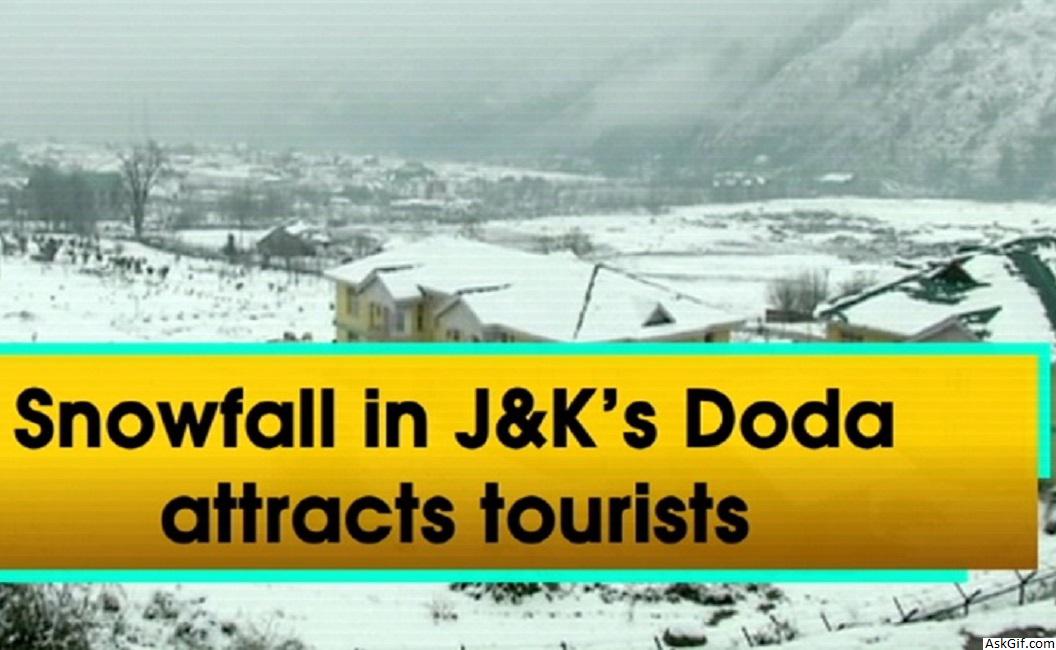
Doda is a town and a notified area committee in Doda district in the Indian state of Jammu and Kashmir. Doda is located at 33.13°N 75.57°E and has an average elevation of 1,107 metres (3631 feet).
Doda is a district in eastern part of Jammu Division of the Indian state of Jammu and Kashmir. The district consists of 8 Tehsils: Bhagwa, Assar, Doda, Gundana, Marmat, Bhaderwah, Gandoh (Bhalessa), and Thathri.
Demographics
As of 2011 India census, Doda had a population of 25,527. Males constitute 64% of the population and females 36%. Doda has an average literacy rate of 5% higher than the Indian national average of 73%: male literacy is 85% and, female literacy is 61%. In Doda, 10% of the population is under 6 years of age.
Religion
Doda Town - Hindu 32.62%, Muslim 66.45%, Christian 0.12%, Sikh 0.64%, Buddhist 0.00% Jain 0.06%, Others 0.00%, Not Stated 0.11%
History
The Doda district consists of areas drawn from the ancient principalities of Kishtwar and Bhadarwah, both of which were part of a district by the name of 'Udhampur' in the princely state of Jammu and Kashmir.
In 1948, the erstwhile Udhampur district was partitioned into the present Udhampur district, containing the Udhampur and Ramanagar tehsils, and a 'Doda' district containing the Ramban, Bhadarwah and Kishtwar tehsils.
In 2006, Ramban was made into an independent district and the hilly area to the east of the present Doda district was separated as the Kishtwar district. The remaining areas include the Doda tehsil carved out of Kistwar and the original Bhadarwah, now divided into three tehsils.
Demographics
Religion in Doda district (2011)
Islam (53.82%)
Hinduism (45.77%)
Christianity (0.12%)
Sikhism (0.10%)
Others (0.03%)
Atheist (0.18%)
According to the 2011 census Doda district has a population of 409,936, roughly equal to the nation of Malta. This gives it a ranking of 556th in India (out of a total of 640). The district has a population density of 79 inhabitants per square kilometre (200/sq mi) . Its population growth rate over the decade 2001-2011 was 27.89%. Doda has a sex ratio of 922 females for every 1000 males, and a literacy rate of 65.97%. The district has a Muslim majority 53.82%, with Hindus constituting 45.94% of the population and the remainder consisting of Christians, Sikhs, Buddhists and Jains.
Languages
Prominent Scholar Sumantra Bose states that the majority of Doda Muslims are Kashmiri-speaking. A study conducted in 2014 identified 40% of the population as Kashmiri-speaking. A section of population also speaks a dialect named Sarazi.
Vernaculars include Bhadrawahi, a Western Pahari dialect spoken by about 53 000 people in Doda district, written in both the Arabic and Devanagari scripts.
Administration
Administratively, the district with 406 villages, three being un-inhabited.[citation needed] Doda District has been divided into three subdivisions viz., Doda, Bhaderwah and Bhalessa(Gandoh) . It has twelve tehsils. There are eight Rural Development Blocks comprising Bhaderwah, Ghat(Doda), Thathri, Gandoh, Bhagwah, Assar, Marmat and Gundana. The number of Panchyats is 232.
Politics
Doda District has two assembly constituencies: Bhaderwah and Doda.
source: https://en.wikipedia.org/wiki/Doda_district