Top Places to visit in Lucknow, Uttar Pradesh
✈️ travel

Top Places to visit in Lucknow, Uttar Pradesh

11 min read 2,133 words
11 min read
ShareWhatsAppPost on X
  • 1Lucknow is the capital of Uttar Pradesh and a significant cultural and artistic hub in North India.
  • 2The city has a rich history, having been the seat of power for the Nawabs in the 18th and 19th centuries.
  • 3Lucknow is home to several prestigious educational institutions, including the Indian Institute of Management Lucknow and the University of Lucknow.

AI-generated summary · May not capture all nuances

Key Insight
AskGif

"Lucknow is the capital of Uttar Pradesh and a significant cultural and artistic hub in North India."

Top Places to visit in Lucknow, Uttar Pradesh

Lucknow is the capital and largest city of the Indian state of Uttar Pradesh, and is also the administrative headquarters of the eponymous district and division. It is the eleventh most populous city and the twelfth most populous urban agglomeration of India. Lucknow has always been known as a multicultural city that flourished as a North Indian cultural and artistic hub, and the seat of power of Nawabs in the 18th and 19th centuries. It continues to be an important centre of governance, administration, education, commerce, aerospace, finance, pharmaceuticals, technology, design, culture, tourism, music and poetry.

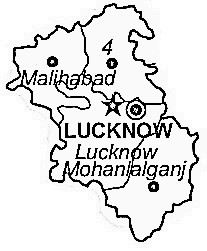
The city stands at an elevation of approximately 123 metres (404 ft) above sea level. Lucknow district covers an area of 2,528 square kilometres (976 sq mi). Bounded on the east by Barabanki, on the west by Unnao, on the south by Raebareli and in the north by Sitapur, Lucknow sits on the northwestern shore of the Gomti River. Hindi is the main language of the city and Urdu is also widely spoken. Lucknow is an important centre of Shia Islam in India with the highest Shia Muslim population in India.[citation needed]

Historically, Lucknow was the capital of the Awadh region, controlled by the Delhi Sultanate and later the Mughal Empire. It was transferred to the Nawabs of Awadh. In 1856, the British East India Company abolished local rule and took complete control of the city along with the rest of Awadh and, in 1857, transferred it to the British Raj. Along with the rest of India, Lucknow became independent from Britain on 15 August 1947. It has been listed as the 17th fastest growing city in India and 74th in the world.

Lucknow, along with Agra and Varanasi, is in the Uttar Pradesh Heritage Arc, a chain of survey triangulations created by the Government of Uttar Pradesh to boost tourism in the state.

Education

La Martiniere College

Lucknow is home to a number of prominent educational and research organisations including Indian Institute of Management Lucknow (IIM-L), Indian Institute of Information Technology, Lucknow (IIIT-L), Central Drug Research Institute (CDRI), Indian Institute of Toxicology Research, National Botanical Research Institute (NBRI), Institute of Engineering and Technology (IET Lko), Dr. Ram Manohar Lohia National Law University (RMNLU), Institute of Hotel Management, Lucknow (IHM), Sanjay Gandhi Postgraduate Institute of Medical Sciences (SGPGI), Dr. Ram Manohar Lohia Institute of Medical Sciences and King George's Medical University (KGMU). The National P. G. College (NPGC), affiliated to the University of Lucknow, is ranked as the second best college imparting formal education in the country by the National Assessment and Accreditation Council.

Educational institutions in the city include seven universities including the University of Lucknow, a Babasaheb Bhimrao Ambedkar University, a technical university (Uttar Pradesh Technical University), a law university (RMLNLU), an islamic university (DUNU) and a large number of polytechnics, engineering institutes and industrial training institutes. Other research organisations in the state include the Central Institute of Medicinal and Aromatic Plants, Central Food Technological Research Institute, and the Central Glass and Ceramic Research Institute.

Some of Uttar Pradesh's major schools are located in Lucknow including Delhi Public School having its branches in Eldeco, Indiranagar. City Montessori School, Colvin Taluqdars' College, Centennial Higher Secondary School, St. Francis' College, Loreto Convent Lucknow, St. Mary's Convent Inter College, Kendriya Vidyalaya, Lucknow Public School, Stella Maris Inter College, Seth M.R. Jaipuria School, Cathedral School, Mary Gardiner's Convent School, Modern School, Amity International School, St. Agnes, Army Public School, Mount Carmel College, Study Hall, Christ Church College, Rani Laxmi Bai School and Central Academy.

City Montessori School, with over 20 branches spread throughout the city, is the only school in the world to have been awarded a UNESCO Prize for Peace Education. CMS also holds a Guinness World Record for being the largest school in the world with over 40,000 pupils. The school consistently ranks among the top schools of India.

source: https://en.wikipedia.org/wiki/Lucknow

1. Chhota ImamBara

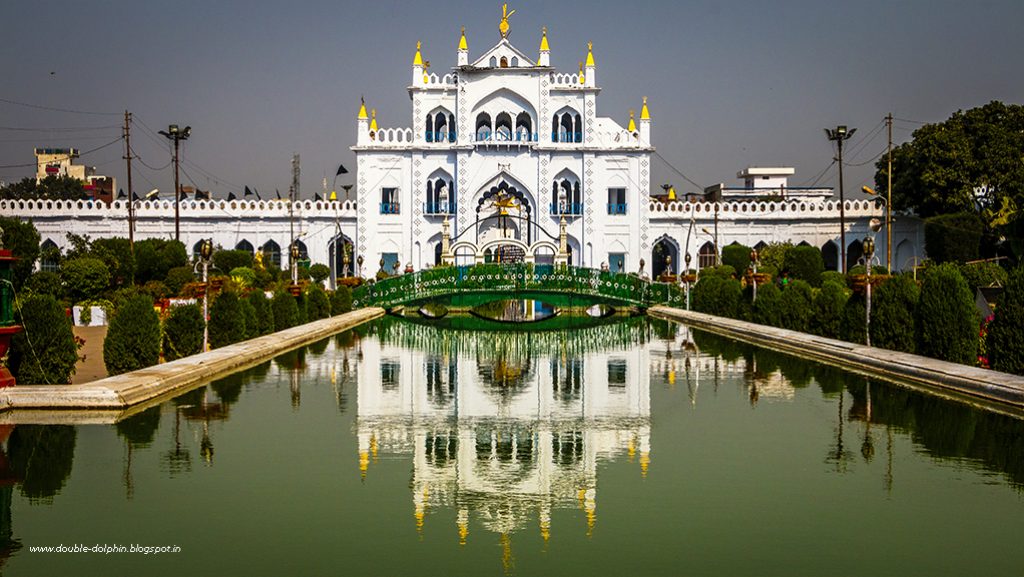
It serves as a gallery for display of life size portraits of the Nawabs of Awadh. There are around 30 stairs to reach the Picture Gallery. In front of the Picture gallery, there is a beautiful pond surrounded by green lawns and trees. The portraits of Nawabs indicate the contemporary grand costumes and jewellery used in those days.

1. Chhota ImamBara
1. Chhota ImamBara

2. Bada Imam Bara (Bhool-Bhulaiyan)

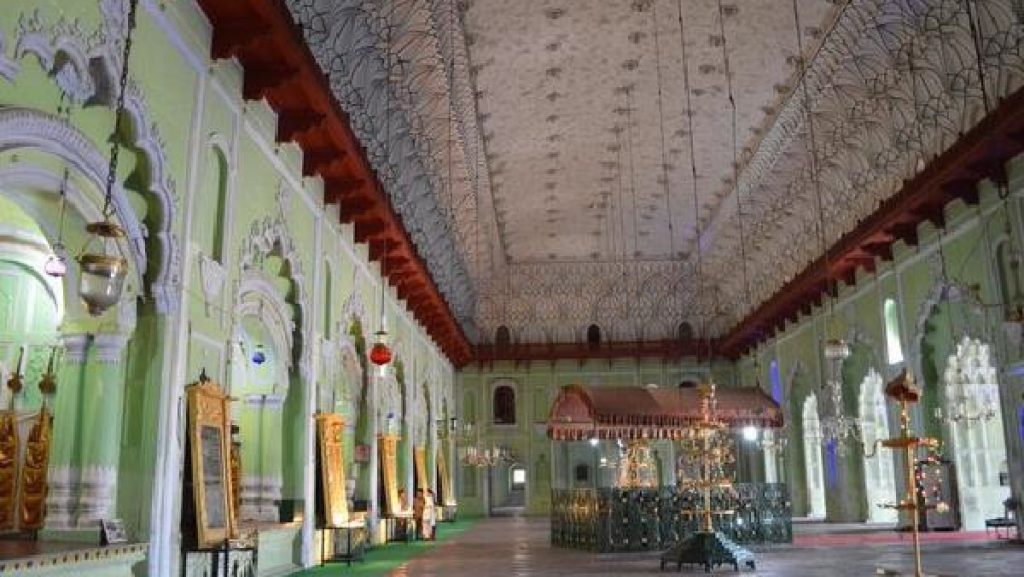
Its central hall is said to be the largest vaulted chamber in the world. Except for the galleries in the interior, there is no woodwork in the entire structure. It is now used by Shia Muslims for the purpose of Azadari.

It is believed that the construction of this grand building was started in 1785 when a devastating famine had hit Awadh, and the nawab’s objective was to provide employment for people in the region for almost a decade while the famine lasted.

It has large underground passages which have been blocked up. A staircase from outside leads to a series of labyrinths known as Bhool-Bhulaiyan, which is a complicated entanglement of zig-zag passages. Visitors are advised to visit only with authorised guides. Within the compound of the Imambara is the grand Asafi Mosque. Shahi Baoli is another attraction here.

Timing : Sunrise to Sunset.

Entry fee : Rs. 25.00 (Indian).

Rs. 500.00 (Foreigner) (inclusive of Bara Imambara, Chhota Imambara, Picture Gallery, Shahi Hamam).

2. Bada Imam Bara (Bhool-Bhulaiyan)

3. Rumi Gate

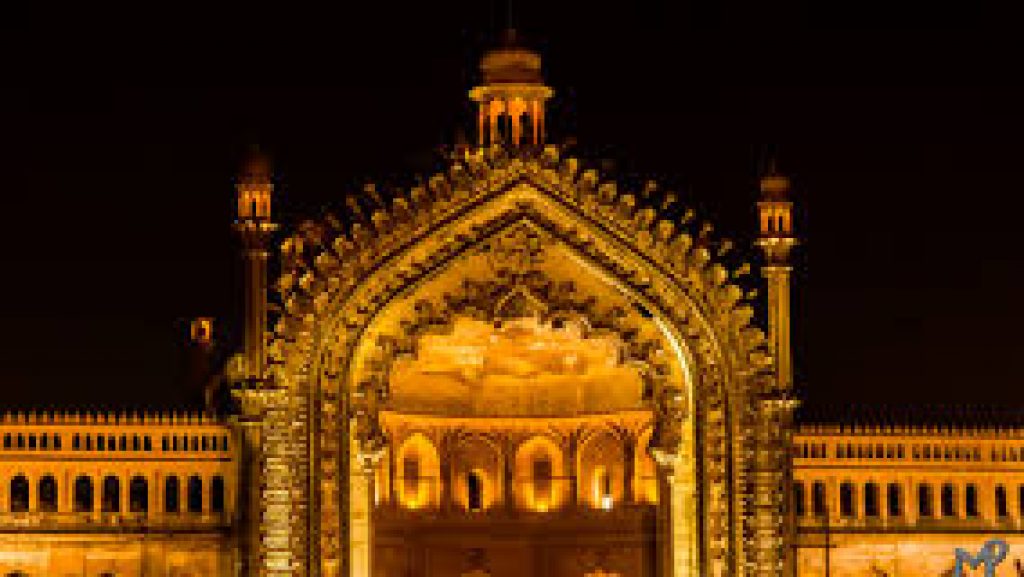
Lucknow, the seat of the nawabs of Awadh, is home to several magnificent monuments. The 60 feet high Rumi Gate in Lucknow was constructed during the reign of Nawab Asafi-ud-Daula in 1784-86. It is said to be identical in design to an ancient portal at Constantinople in Turkey and is also referred to as Turkish Gate.

3. Rumi Gate
3. Rumi Gate

4. Ghanta Ghar

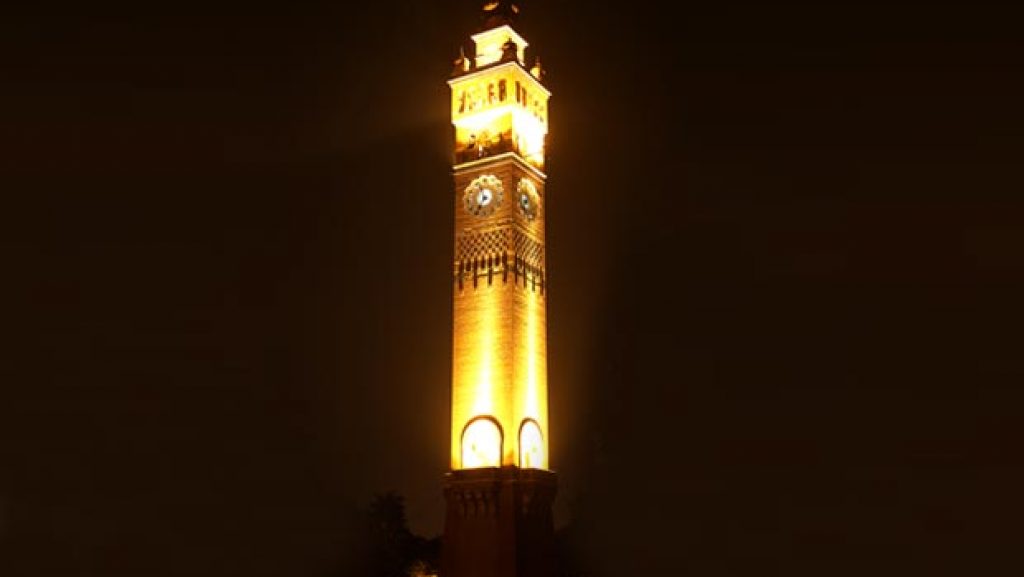
Husainabad Clock Tower is a clock tower located in the city of Lucknow. It was built in 1881 by Nawab Nasir-ud-Din Haider for the arrival of Sir George Cooper, the first lieutenant governor of the United Provinces of Oudh. It was built at a cost of Rs 1.75 lakhs

4. Ghanta Ghar
4. Ghanta Ghar

5. British Residency

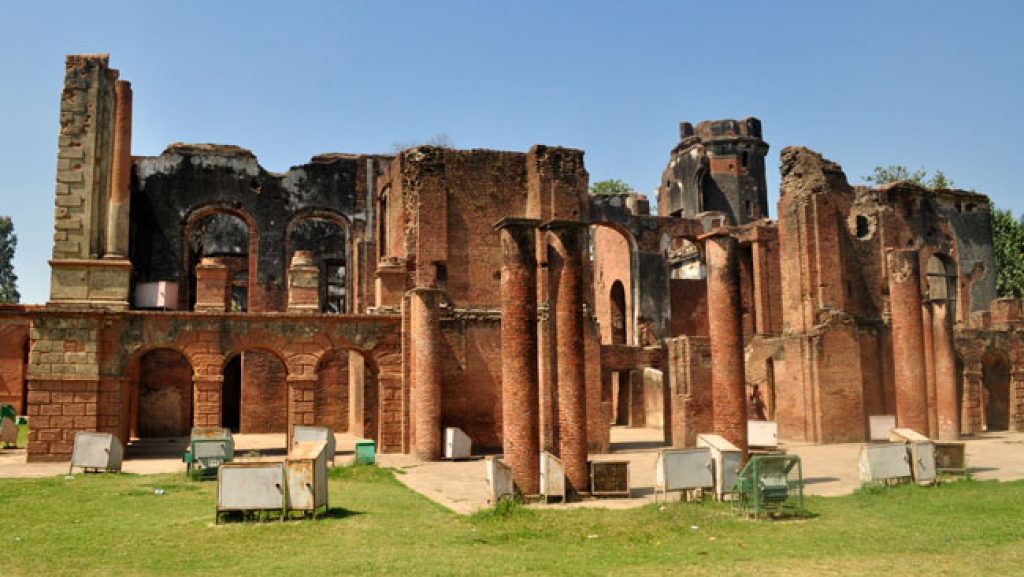
The British Residency of Lucknow is a famous historical landmark of this place. It is now in ruins and has been declared a protected monument by the Archaeological Survey of India. The British Residency was the place that served as a refuge for approximately 3000 British inhabitants during the time of the uprising of 1857

source: https://lucknow.nic.in/tourist-places/

5. British Residency

6. How to Reach

Roads

The roads of Lucknow (Gomti Nagar in picture)

Two major Indian National Highways have their intersection at Lucknow's Hazratganj intersection: NH-24 to Delhi, NH-30 to Allahabad via Raebareli, NH-27 to Porbandar via Jhansi and Silchar via Gorakhpur. Multiple modes of public transport are available such as metro rail, taxis, city buses, cycle rickshaws, auto rickshaws and compressed natural gas (CNG) low floor buses with and without air conditioning. CNG was introduced as an auto fuel to keep air pollution under control. Radio Taxis are operated by several major companies like Ola and Uber

City buses

Lucknow city's bus service is operated by Uttar Pradesh State Road Transport Corporation (UPSRTC), a public sector passenger road transport corporation headquartered in Mahatma Gandhi road. It has 300 CNG buses operating in the city. There are around 35 routes in the city. Terminals for city buses are located in Gudamba, Viraj Khand, Alambagh, Scooter India, Institute of Engineering and Technology, Babu Banarasi Das University, Safedabad, Pasi qila, Charbagh, Andhe Ki Chowki, and the Budheshwar Intersection. There are four bus depots in Gomti Nagar, Charbagh, Amausi, and Dubagga.

Inter-state buses

The major Dr. Bhimrao Ambedkar Inter-state Bus Terminal (ISBT) in Alambagh provides the main inter and intrastate bus lines in Lucknow. Located on National Highway 25, it provides adequate services to ongoing and incoming customers. There is a smaller bus station at Qaiserbagh. The bus terminal formally operated at Charbagh, in front of the main railway station, has now been re-established as a city bus depot. This decision was taken by the state government and UPSRTC to decongest traffic in the railway station area. Kanpur Lucknow Roadways Service is a key service for daily commuters who travel back and forth to the city for business and educational purposes. Air conditioned "Royal Cruiser" buses manufactured by Volvo are operated by UPSRTC for inter state bus services. Main cities served by the UPSRTC intrastate bus service are Allahabad, Varanasi, Jaipur, Jhansi, Agra, Delhi, Gorakhpur. The cities outside Uttar Pradesh that are covered by inter-state bus services are Jaipur, New Delhi, Kota, Singrauli, Faridabad, Gurgaon, Dausa, Ajmer, Dehradun, and Haridwar.

Railways

Lucknow Railway Station

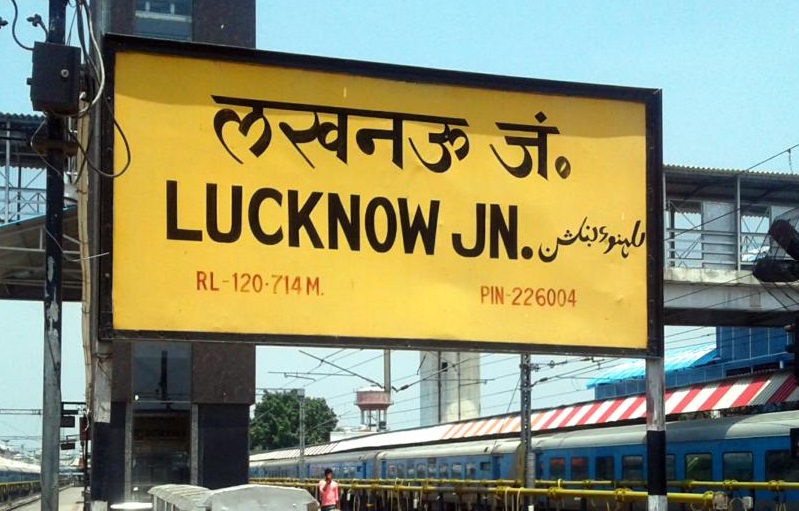
Lucknow is served by several railway stations in different parts of the city. The main long-distance railway station is Lucknow Railway Station located at Charbagh. It has an imposing structure built in 1923 and acts as the divisional headquarters of the Northern Railway division. Its neighbouring and second major long-distance railway station is Lucknow Junction railway station operated by the North Eastern Railway. The city is an important junction with links to all major cities of the state and country such as New Delhi, Mumbai, Hyderabad, Kolkata, Chandigarh, Amritsar, Jammu, Chennai, Bangalore, Ahmedabad, Pune, Indore, Bhopal, Jhansi, Jabalpur, Jaipur, Raipur and Siwan. The city has a total of fourteen railway stations[96] with meter gauge services originating at Aishbagh and connecting to Lucknow city, Daliganj and Mohibullapur. Except for Mohibullapur, all stations are connected to broad gauge and metre gauge railways. All stations lie within the city limits and are well interconnected by bus services and other public road transport. Suburban stations include Bakshi Ka Talab and Kakori. The Lucknow–Kanpur Suburban Railway was started in 1867 to cater for the needs of commuters travelling between Lucknow and Kanpur. Trains running on this service also stop at numerous stations at different locations in the city forming a suburban rail network.

Air transport

Terminal-2, CCS International Airport

Direct air connections are available in Lucknow to New Delhi, Patna, Kolkata, Mumbai, Bangalore, Ahmedabad, Hyderabad, Chennai, Guwahati, Jaipur, Raipur and other major cities via Chaudhary Charan Singh International Airport. The airport has been ranked the second best in the world in small airport category.[98] The airport is suitable for all-weather operations and provides parking facilities for up to 50 aircraft. At present, Air India, Air India Express, Jet Air, GoAir, IndiGo, Saudi Airlines, Flydubai, Oman Air and Air Vistara operate domestic and international flights to and from Lucknow. Covering 1,187 acres (480 ha), with Terminal 1 for international flights and Terminal 2 for domestic flights, the airport can handle Boeing 767 to Boeing 747-400 aircraft allowing significant passenger and cargo traffic. International destinations include Abu Dhabi, Dubai, Muscat, Riyadh, Singapore, Bangkok, Dammam and Jeddah.

The Planned expansion of the airport will allow Airbus A380 jumbo jets to land at the airport; the Airport Authority of India is also planning to expand the international terminal to increase passenger traffic capacity. There is also a plan for runway expansion. It is the 10th-busiest airport in India, busiest in Uttar Pradesh, and second-busiest in North India.

Metro

Lucknow Metro is a rapid transit system which started its operations from 6 September 2017. Lucknow Metro system is the fastest built metro system in the world and most economical high-speed rapid transit system project in India. The commencement of civil works started on 27 September 2014.

Charbagh Metro Station

In February, Chief Minister Akhilesh Yadav gave the approval to set up a metro rail system for the state capital. It is divided into two corridors with the North-South corridor connecting Munshipulia to CCS International Airport and the East-West corridor connecting Charbagh Railway Station to Vasant Kunj. This will be the most expensive public transport system in the state but will provide a rapid means of mass transport to decongest traffic on city roads. Construction of the first phase will be complete by March 2017. The completion of metro rail project is the primary object of Uttar Pradesh government currently headed by the chief minister Yogi Adityanath

On 5 September 2017, Home Minister Rajnath Singh and CM Yogi Adityanath showed green flag to the Lucknow Metro.

Cycling

Lucknow is among the most bicycle-friendly cities in Uttar Pradesh. Bike-friendly tracks have been established near the Chief Minister's residence in the city. The four-and-a-half-kilometre track encompasses La-Martiniere College Road next to Golf Club on Kalidas Marg, where the Chief Minister resides, and Vikramaditya Marg, which houses the office of the ruling party. The dedicated four-metre-wide lane for cyclists is separate from the footpath and the main road. With Amsterdam as the inspiration, new cycle tracks are to be constructed in the city to make it more cycle-friendly, with facilities like bike rental also in the works.[107][108] In the year 2015, Lucknow also hosted a national level cycling event called 'The Lucknow Cyclothon' in which professional and amateur cyclists took part.[109] An under-construction cycle track network by the Government Of Uttar Pradesh is set to make Lucknow the city with India's biggest cycle network.

6. How to Reach
6. How to Reach

Enjoyed this article?

Share it with someone who'd find it useful.

ShareWhatsAppPost on X

AskGif

Published on 9 December 2018 · 11 min read · 2,133 words

Part of AskGif Blog · travel

You might also like

Top Places to visit in Lucknow, Uttar Pradesh | AskGif Blog