Top Places to Visit in Ghazipur, Uttar Pradesh
✈️ travel

Top Places to Visit in Ghazipur, Uttar Pradesh

4 min read 766 words
4 min read
ShareWhatsAppPost on X
  • 1Ghazipur is the administrative headquarters of its district and is known for its historical significance and monuments from the Mughal Empire.
  • 2The city houses the world's largest legal opium factory, established by the British East India Company in 1820.
  • 3Ghazipur features the tomb of Lord Cornwallis, an important figure in British history, overlooking the Ganges River.

AI-generated summary · May not capture all nuances

Key Insight
AskGif

"Ghazipur is the administrative headquarters of its district and is known for its historical significance and monuments from the Mughal Empire."

Top Places to Visit in Ghazipur, Uttar Pradesh

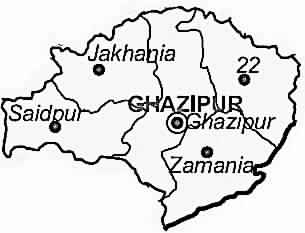
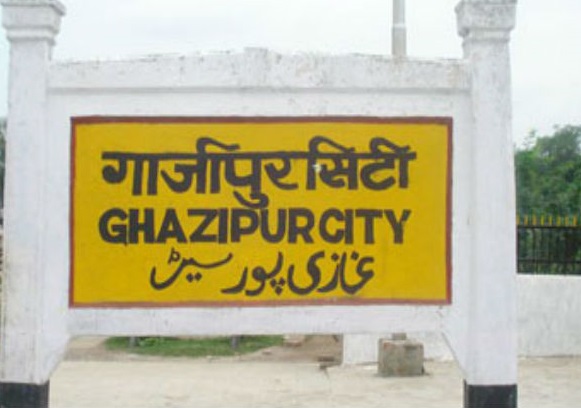
Ghazipur (previously spelled Ghazeepore, Gauspur, and Ghazipour), is a city in the state of Uttar Pradesh, India. Ghazipur city is the administrative headquarters of the Ghazipur district, one of the four districts that form the Varanasi division of Uttar Pradesh. The city of Ghazipur also constitutes one of the five distinct tehsils, or subdivisions, of the Ghazipur district.

Ghazipur is well known for its opium factory, established by the British East India Company in 1820 and still the biggest legal opium factory in the world, producing the drug for the global pharmaceutical industry. Ghazipur lies close to the Uttar Pradesh-Bihar border, about 80 km (50 mi) east of Varanasi and 50 km (31 mi) from Buxar, the entry point to Bihar state.

Ghazipur is famous for its Gahmar village (which is said to be the largest village of Asia) and wherein every household has one person either in Army or is an Ex-serviceman.

Places of interest

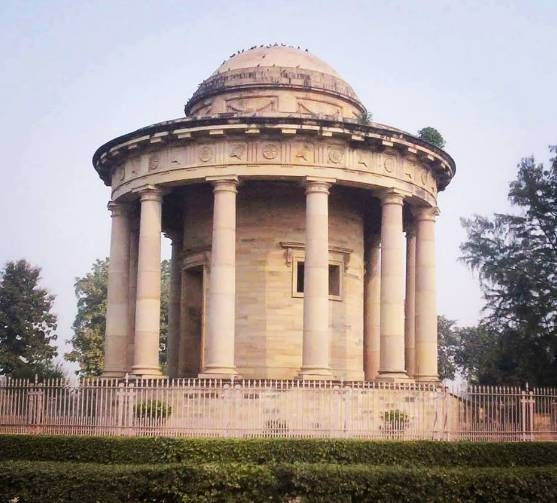
Sights in the city include several monuments built by Nawab Shaikh Abdulla, or Abdullah Khan, a governor of Ghazipur during the Mughal Empire in the eighteenth century, and his son. These include the palace known as Chihal Satun, or "forty pillars", which retains a very impressive gateway although the palace is in ruins, and the large garden with a tank and a tomb called the Nawab-ki-Chahar-diwari. The mosque near this tomb was probably originally a Hindu building. The road that starts at the Nawab-ki-Chahar-diwari tomb and runs past the mosque leads, after 10 km, to a matha devoted to Pavhari Baba. The tank and tomb of Pahar Khan, faujdar of the city in 1580, and the plain but ancient tombs of the founder, Masud, and his son are also in Ghazipur, as is the tomb of Lord Cornwallis, one of the major figures of Indian and British history. Cornwallis is famous for his role in the American Revolutionary War, and then for his time as Governor-General of India, being said to have laid the true foundation of British rule. He was later Lord Lieutenant of Ireland, there suppressing the 1798 Rebellion and establishing the Act of Union. He died in Ghazipur in 1805, soon after his returning to India for his second appointment as Governor-General. His tomb, overlooking the Ganges, is a heavy dome supported on 12 Doric columns above a cenotaph carved by John Flaxman. The remains of an ancient mud fort also overlook the river, while there are many beautiful or impressive ghats leading to the Ganges, the oldest of which is the ChitNath Ghat.

source: https://en.wikipedia.org/wiki/Ghazipur

1. Lord Cornwallis Tomb

The tomb of Lord Cornwallis is situated at Ghazipur, it is a small town in the eastern part of Uttar Pradesh approximately seventy kilometres east of Varanasi. It is very well connected by road and railways with different parts of the country.

Lord Cornwallis is known as a great administrator and a successful commander-in-chief in the history of India during British period. He was appointed Governor General of India twice. The first tenure from September 1786 to October 1793 is remembered for his valuable contributions towards revenue reforms, judicature system and the second Mysore war. It was he who introduced the system of permanent settlement which is a landmark in the history of revenue reforms. His great reform in judicature was the establishment of Nizamat Sadr Adalat or the Supreme Court of criminal judicature at Calcutta. Further, he separated the functions of District Collector and Judge. It is believed that the foundation stones of civil administration in India were laid by his predecessor Hastings whereas the superstructure was raised by Cornwallis. He is known for his successful campaign of second Mysore war during 1790-92 in which he personally led the British army.

1. Lord Cornwallis Tomb

2. Collector Ghat

Collector Ghat is one of the famous tourist places in Ghazipur. it is situated at Collector Ghat Road, Niyazi Mohalla, Ghazipur, Uttar Pradesh 233001. If you visit Ghazipur then you should be visiting this place.

2. Collector Ghat
2. Collector Ghat

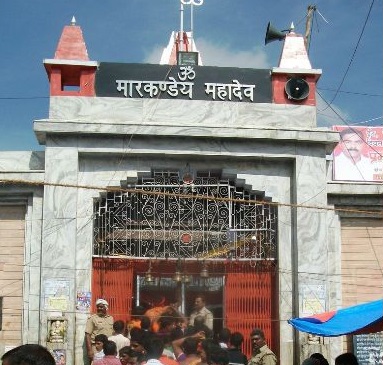
3. Markandey Mahadev Temple , Kaithi

Markandey Mahadev temple is situated at Kaithi, Varanasi. Once, there was a couple named, Mrikandu and his wife Marudvati. Both were devotees of Lord Shiva and they had no child. Then they decided to do a ‘Tap’ and one day Lord Shiva became happy on that couple and came out before them. There Lord Shiva asked them if they want to have a common son having a long life or an extraordinary son having a short life. The couple had requestd to Lord Shiva for the latter one.

3. Markandey Mahadev Temple , Kaithi

4. How to Reach

Ghazipur Airport is situated in Ghazipur city. The airport is on the Ghazipur-Mau Road. Airports Authority of India (AAI) is the operator of this Airport.

4. How to Reach
4. How to Reach

Enjoyed this article?

Share it with someone who'd find it useful.

ShareWhatsAppPost on X

AskGif

Published on 8 September 2018 · 4 min read · 766 words

Part of AskGif Blog · travel

You might also like

Top Places to Visit in Ghazipur, Uttar Pradesh | AskGif Blog